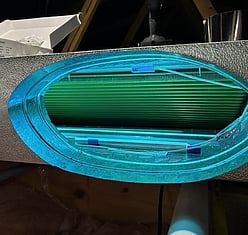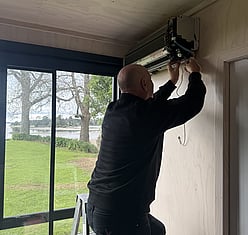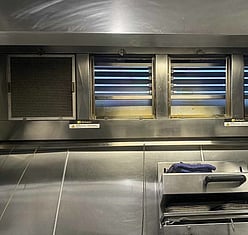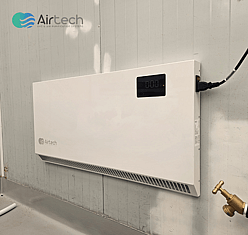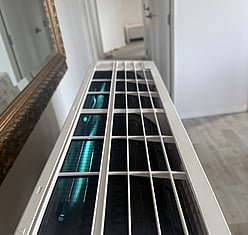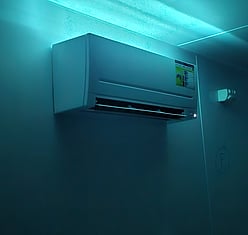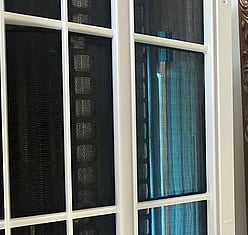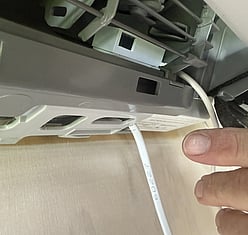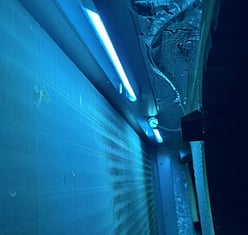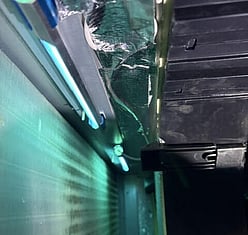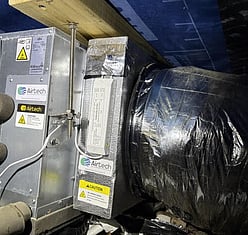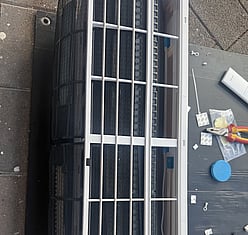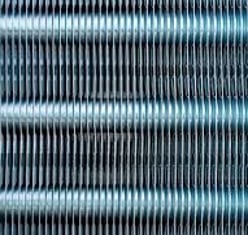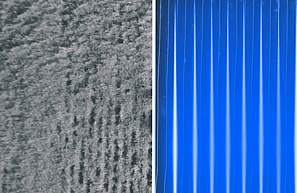
BEFORE & AFTER
Engineering Better Indoor Air Quality
HVAC-Integrated UVC Technology for Healthier, More Efficient Buildings
Engineering Cleaner Air Into Every Building
The Challenge
Today's engineers are expected to design buildings that deliver
Excellent Indoor Air Quality (IAQ)
Energy Efficiency
Low lifecycle costs
Healthy indoor environments
Long-term asset performance
However, conventional HVAC systems remain vulnerable to
Biofilm formation
Microbial growth
Coil contamination
Mould
Airborne pathogen circulation
Declining heat transfer efficiency
These issuers affect occupant wellbeing, maintenance costs, and HVAC performance.
The Opportunity
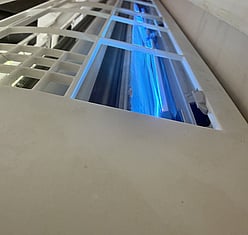
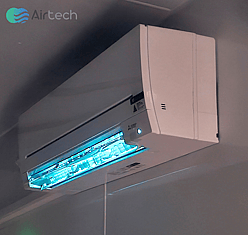
Integrating UVC technology into HVAC systems provides continuous biological control at the source of contamination.
Benefits Include
Improved IAQ
Cleaner HVAC equipment
Reduced microbial growth
Lower maintenance requirements
Support for energy-efficient operation
Improved asset longevity
The Engineering Problem
HVAC SYSTEMS ARE BIOLOGICAL ENVIRONMENTS
Every HVAC system contains conditions that promote biological contamination.
Enabling Factors
Moisture and condensation - inherent to cooling coil operation
Organic matter - from outdoor air, occupants, and building materials
Dust and particle accumulation
Dark internal spaces with limited airflow disruption
Temperatures within the growth range of common bacteria and mould
What grows
Biofilm - complex microbial communities on coil surfaces and drain pans
Bacteria - including Legionella-family organisms in wet environments
Mould and fungi - spores distributed through air supply
Odour-causing microorganisms affecting perceived air quality
Why UVC?
Continuous Biological Control
The Limitation of Periodic Cleaning
Cleaning every 6-12 months addresses visible contamination
Contamination begins return immediately after each clean
Between cleans, biological growth compounds - affecting performance progressively
Cleaning requires system downtime, access and chemical treatment
Cannot address airborne microorganisms circulating through the air stream
Why Continuous Control Matters?
The Biology of Biofilm
Biofilm formation begins within hours of a clean surface being exposed to airflow
Within weeks, biofilm provides structural protection for microorganisms - making chemical cleaning less effective
UVC applied continuously prevents this cycle from beginning
Engineering Principals
Suitable HVAC Applications
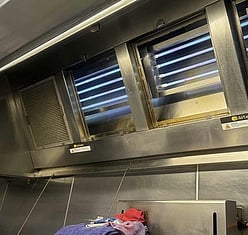
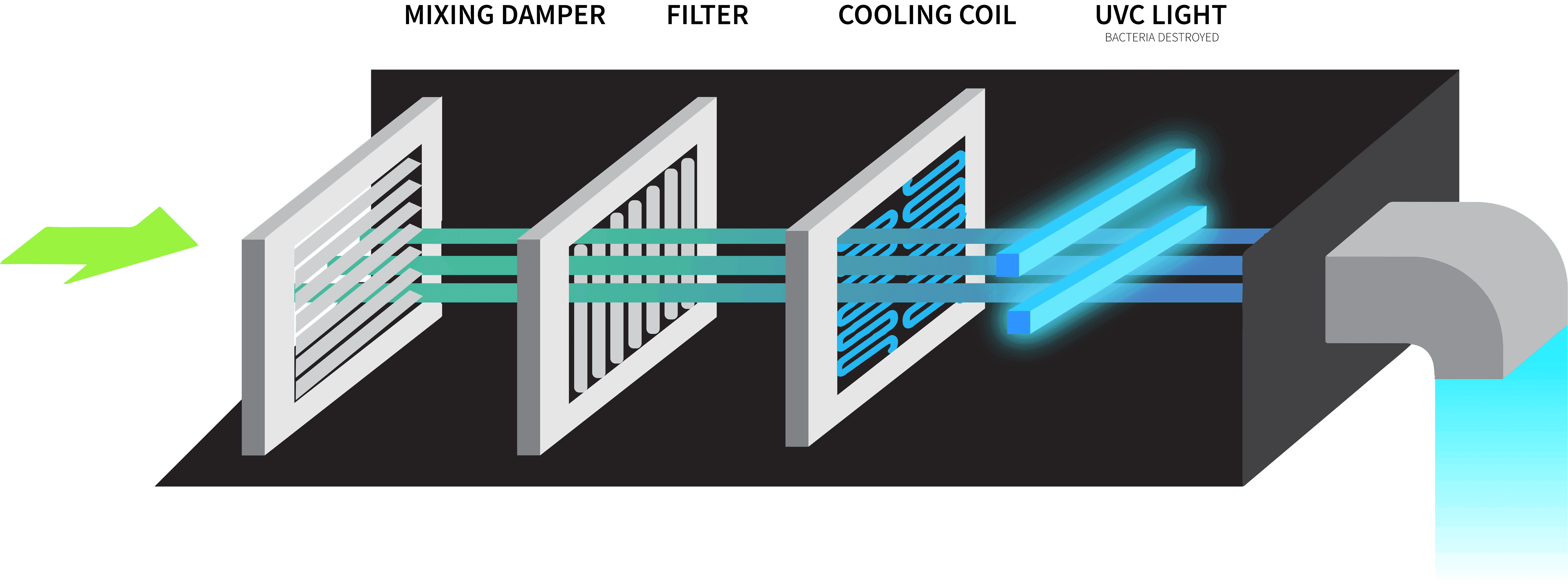
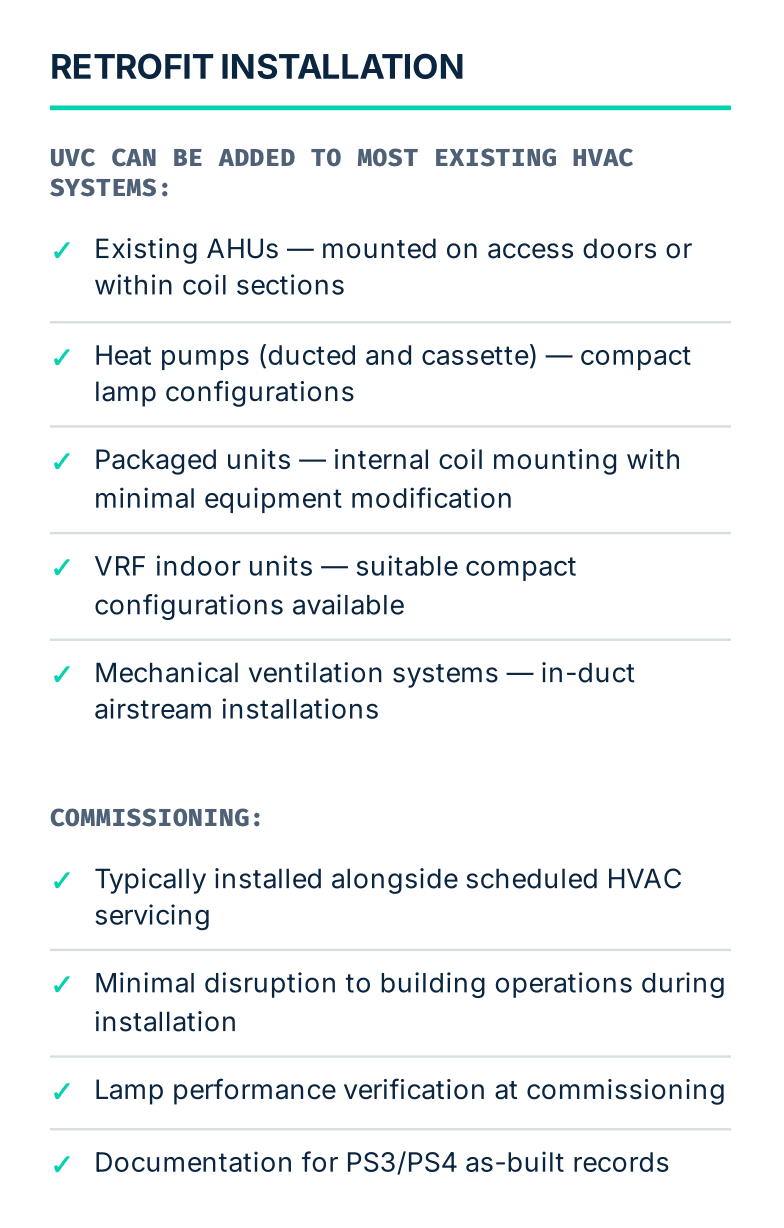
Air Handling Units (AHUs) - coil-mounted arrays for large commercial systems
Fan Coil Units (FCUs) - compact single-lamp or twin-lamp systems
Heat Pumps - ducted and cassette configurations
VRF Systems - indoor unit coil protection
Packaged Units - internal coil mounting
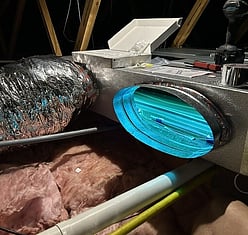
Fresh Air Systems - in-duct airstream treatment
Mechanical Ventilation Systems - supply air treatment for IAQ
Key Design Considerations
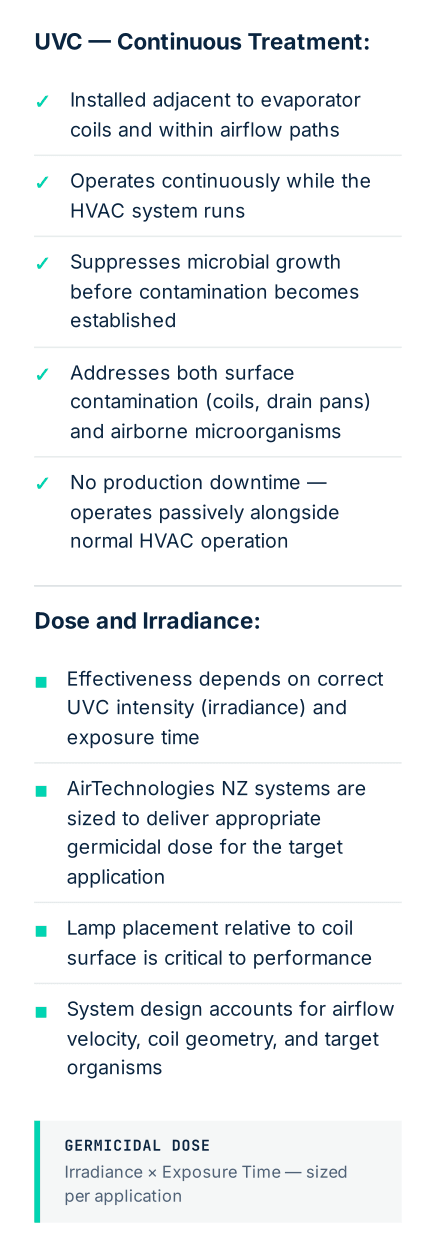
Lamp irradiance must be matched to the target biological load
Exposure time determined by airstream velocity past the lamp array
Coil geometry influences shadow zones - lamp placement is critical
Reflective internal surfaces can enhance irradiance distribution
Safety interlocks and access baffles required for maintenance access
Improve HVAC Efficiency & Reduce Energy Costs
Cleaner HVAC systems can work more efficiently.
AirTech UVC systems help prevent the build-up of mould, bacteria and biofilm on HVAC coils and internal components, helping maintain clean heat-transfer surfaces and consistent airflow. By keeping your HVAC system cleaner, UVC can support more efficient operation, reduce the strain on equipment and help minimise unnecessary energy consumption over time.
For commercial buildings, this can contribute to lower operating costs, improved HVAC performance and a longer equipment lifespan — making UVC a smart addition to an energy-conscious building strategy.
Cleaner systems. Better performance. Smarter energy use.
The Contamination - Performance Relationship
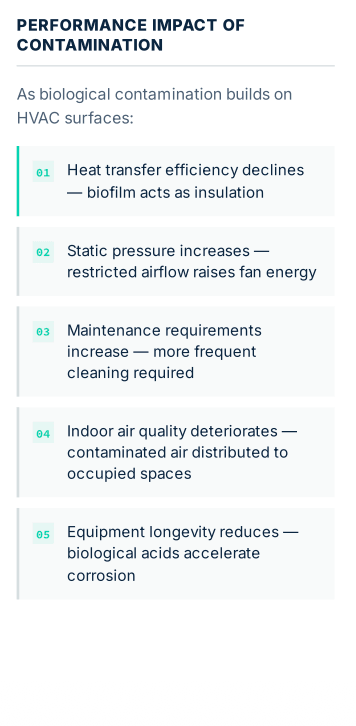
As HVAC coils accumulate biological contamination, system performance degrades progressively:
Biofilm on coil surfaces reduces heat transfer coefficient
Reduced thermal efficiency forces longer compressor run cycles to meet set point
Fouled coil increases static pressure = increased fan energy consumption
Reduced supply air volume reduces cooling capacity
System operates outside design parameters - increased wear on mechanical components
NOTE: Specific energy savings vary by system type, contamination baseline, and operating conditions. Energy performance benefits should be verified against individual project baselines.
Maintaining Design Performance
UVC integration can assist in maintaining coil condition closer to design specification:
Heat transfer performance closer to design intent over the equipment lifecycle
Reduced fan energy associated with contamination related pressure increases
More consistent delivery of design cooling capacity
Lower likelihood of set point failures during peak demand periods
Operation Efficiency Gains
HVAC Maintenance Reduction
Reduced frequency of chemical coil cleaning programmes
Fewer emergency callouts related to coil fouling or drain pan overflow
Less downtime associated with biological contamination cleaning
Building Operations
More predictable HVAC performance across seasons
Reduced odour complaints from occupants - fewer building management interventions
Lower consumable and chemical costs associated with biological maintenance
Return on Investment That Goes Beyond Clean Air
Installing UVC technology isn't just about improving indoor air quality—it's about reducing ongoing operating costs.
By keeping HVAC systems cleaner, reducing biofilm build-up, and helping minimise airborne contaminants, Air Technologies' solutions can deliver measurable value over time.
✔ Lower HVAC maintenance costs
✔ Improved system efficiency and performance
✔ Extended equipment lifespan
✔ Reduced downtime and cleaning requirements
✔ Healthier indoor environments that can help reduce staff absenteeism
Cleaner air. Smarter buildings. Long-term savings.
**Positive ROI typically within 18months to 2 years in medium to large commercial buildings
5-25%
Energy Savings
HVAC Energy reduction range
20-50%
Maintenance Savings
Direct system maintenance reduction
18-24 MO
Payback Period
Typical full investment return period
Indoor Air Quality
Supporting Healthy Buildings
Indoor Air Quality is increasingly recognised as a key component of building performance - and a growing area of engineering specification.
IAQ Frameworks and Standard Being Adopted Include:
WELL Building Standard - air quality as a core building performance domain
Healthy Buildings initiatives - evidence-based IAQ targets for occupied spaces
ASHRAE 62.1 - ventilation for acceptable indoor air quality
ASHRAE 188 - Legionella risk management in building water systems (contextual reference)
New Zealand Building Code Clause G4 - ventilation
New Zealand WorkSafe guidance on workplace
Biological Contribution To IAQ
Conventional HCAV ventilation does not eliminate biological contaminants within the air handling system. Without biological control at source:
Mould spores generated on contaminated coils are distributed to occupied spaces
Bacteria circulate through air supply networks
Odour-causing volatile organic compounds (VOCs) from biofilm enter the supply air stream
Occupants receive air that has passed through a biologically active HVAC system
UVC Contribution to IAQ
UVC integration provides a continuous biological control layer within the HVAC system:
Reduces mould spore load in supply air
Suppresses bacterial growth on coil and drain pan surfaces
Reduces VOC-generating biofilm activity - cleaner-smelling supply air
Complements (does not replace) filtration and ventilation rate strategies
Building Applications:
Healthcare - medical centres, hospitals, aged care, dental clinics
Education - schools, universities, ECE
Commercial offices - co-working, corporate tenancies
Government facilities - high-occupancy public buildings
High-density residential - apartments, student accommodation
The Next Generation of Buildings won't just be Energy Efficient - They'll Actively Enhance Human Health
Specifying UVC air purification allows architects to deliver buildings that prioritise both sustainability and occupant wellbeing.
By integrating directly into HVAC systems, Air Technologies NZ helps create healthier indoor environments while improving building performance, reducing operating costs, and adding long-term value for building owners and occupants.
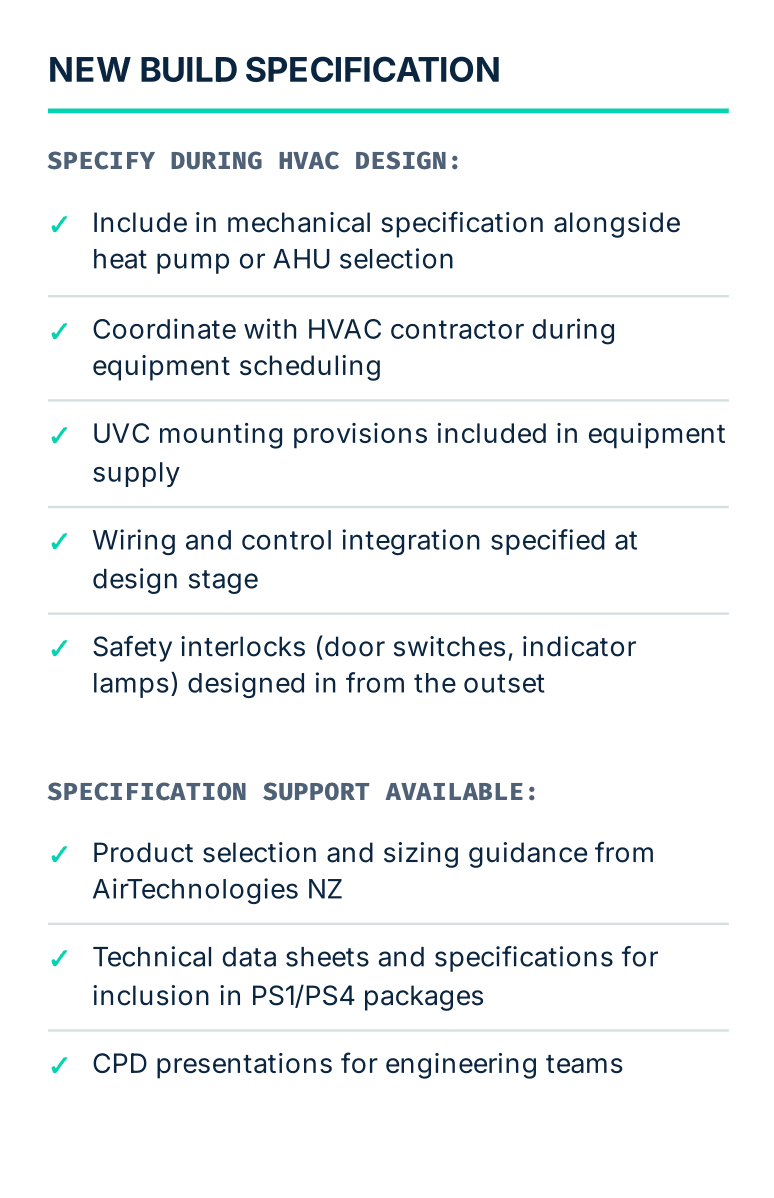
Design Integration
AirTechnologies NZ UVC systems are engineered for practical integration into both new-build and existing HVAC infrastructure.
Integration Considerations:
Electrical: 230V supply to lamp driver. Low power draw
Maintenance access: Lamp replacement without specialist tools. Annual inspection interval
Safety: UV-inhibiting access baffles and door interlock switches standard on all units
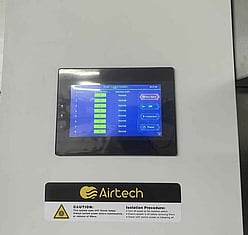
Monitoring: Optional lamp status indicators and hours-run counter available
Sustainable and Environmentally Friendly
Unlike chemical disinfectants, UVC light does not produce harmful by-products or contribute to antimicrobial resistance. Its use in air purification systems reduces the need for harsh chemicals, creating a healthier and more environmentally friendly indoor environment for patients, staff, and visitors.
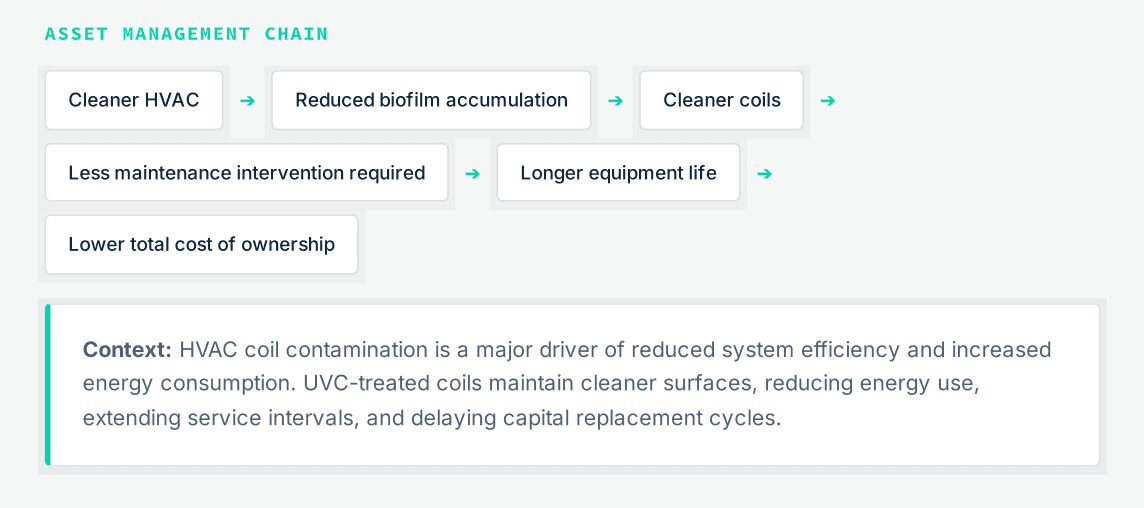
Cleaner Coils - UVC prevents biofilm accumulation on heat exchange surfaces, maintaining optimal thermal efficiency.
Lower Energy - Clean coils transfer heat more efficiently, reducing HVAC energy draw - typically 10-25% improvement in coil efficiency
Less Chemical Cleaning - Reduced frequency of chemical coil cleaning interventions, lowering chemical use, water consumption and contractor costs
Lower Lifecycle Costs - Extended service intervals, delayed capital replacement, and reduced maintenance spend across the HVAC asset lifestyle
Specialist Applications
HVAC Integrated UVC In Specialist Environments
UVC air treatment is particularly well-suited to environments with elevated hygiene requirements, sensitive occupant populations, or critical operational continuity demands.
Healthcare Facilities
Hospitals. Medical Centres, Aged Care, Dental Clinics
Immunocompromised patient populations with heightened infection risk
Joint Commission, Ministry of Health, and DHB facility guidelines reference IAQ
HEPA filtration + UVC combination: layered biological fish reduction
Operating theatre, isolation room, and procedure room ventilation systems
Healthcare-acquired infection (HAI) risk reduction as a design objective
Compliance with NZS 4303 and AS 1668 ventilation standard for healthcare
Laboratories and Controlled Environments
Research Laboratories, Pharmaceutical Manufacturing, Cleanrooms
HEPA-filtered air handling units with UVC coil protection
Biological containment (PC1-PC2)- HVAC biological control layer
Pharmaceutical and food-grade manufacturing environments
Maintains coil cleanliness within filtered air systems
Positive Pressure Spaces
Isolation Rooms, Server Rooms, Clean Manufacturin
Positive pressure maintained to exclude contamination air ingress
UVC within the supply air path - continuous biological control at source
Server and data centre cooling: coil cleanliness supports cooling reliability
High-density occupancy with low tolerance for HVAC performance variation
Schools, Universities, ECE
High density occupancy - elevated airborne transmission risk
Extended daily operating hours - HVAC biological load accumulates
Budget-constrained environments - maintenance reduction has financial value
NZ Ministry of Education and Healthy Schools guidance applicable
Why Engineers Specify AirTechnologies NZ
AirTechnologies NZ is a specialist provider of UVC air treatment systems - not a generalist distributor. Every product and service offering is built around HVAC-integrated UVC technology.
Technical Credibility
Our Team Provides
Technical data sheets and product specification for PS1/PS4 inclusion
System sizing guidance based on coil geometry, airspeed, and irradiance requirements
UV dose calculation - matching lamp output to target microbial reduction objectives
HVAC integration drawings and installation detail support
Commissioning protocols and performance verification procedures
CPD-accredited presentations for mechanical engineering teams
Local Support
Based in New Zealand, Supporting NZ building and Engineering Projects
Direct technical support from directors with HVAC and electrical industry knowledge
Site visits and project-specific assessments available
Responsive local supply chain - no overseas freight delays for standard products
On going maintenance support and lamp replacement programmes
Training for HVAC contractors on installation and commissioning
Product Quality
AirTechnologies NZ Sources and Supplies
Commercial and industrial-grade UVC lamp systems
AT10/AT10L/AT30/AT75/AT150 product range - coil to large AHU scale
UV lamp performance tested to IEC and IESNZ standards where applicable
Products are not consumer-grade - designed for HVAC service conditions
Safety-compliant installations: door interlock switches, UV-inhibiting baffles standard
Specification Confidence
Specifying AirTechnologies NZ Provides Engineers With
A documented, commercially available product
Technical data sufficient for specification and design
Local post-installation support
A supplier committed to the engineering specification market
Product Range
Engineered for HVAC integration across residential, commercial, and industrial applications
Selection Guidance
Product selection is based on:
Coil face area (meters squared)
Supply air velocity at coil face (m/s)
Target UV dose for target organism class
Available installation depth in AHU or heat pump unit
Access requirements for lamp replacement and inspection
UV Dose Guidance
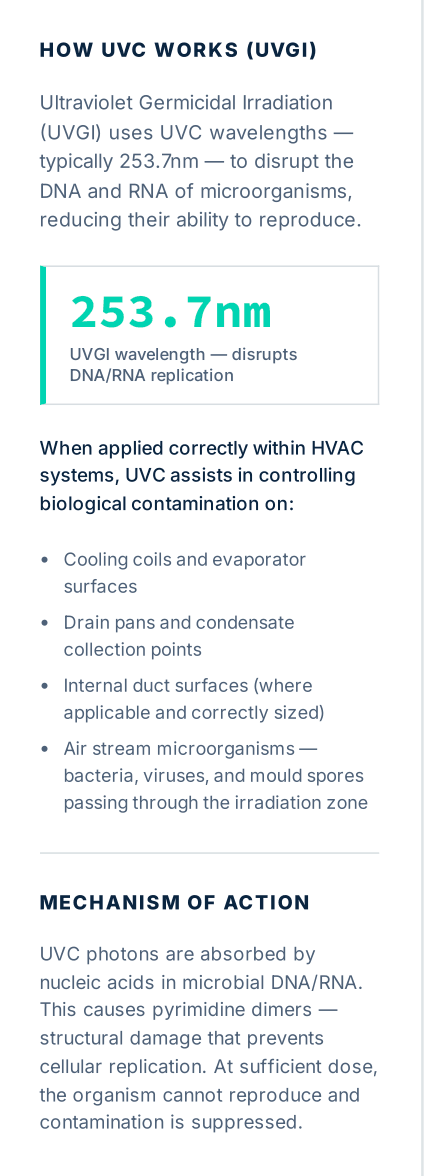
Effective UVGI depends on UV dose - the product of irradiance and exposure time:
Bacteria and mould spores typically require lower doses (effective for surface decontamination)
Airstream disinfection of viruses: requires higher air change irradiance - system design specific
Coil surface sterilisation: continuous low-dose exposure accumulates over contact time
Documentation Available
For each model:
Technical data sheet with lamp output, power, and dimensional drawings
IES test report references (where applicable)
Installation and wiring guide
Commissioning checklist
Why AirTechnologies NZ?
The Case for Specification
Choosing a UVC supplier for an engineering project is a specification decision - not a procurement afterthought. AirTechnologies NZ is the right partner for engineers who need technical confidence, local support, and commercially available product.